Reviews of trade paperbacks of comic books (mostly Marvel), along with a few other semi-relevant comments / reviews.

12 August 2016

Unbeatable Squirrel Girl, v. 3: Squirrel, You Really Got Me Now

Collects: Unbeatable Squirrel Girl v. 2 #1-6 and Howard the Duck v. 5 #6 (2015-6)

Released: May 2016 (Marvel)

Format: 168 pages / color / $17.99 / ISBN: 9780785196266

What is this?:

The culprits: Writer Ryan North, with help from Chip Zdarsky on both #6s, and artist Erica Henderson, with help from Joe Quinones on Howard the Duck #6


I’m a little surprised I haven’t reviewed a volume of Unbeatable Squirrel Girl yet. Let’s rectify that with the most recent release, Unbeatable Squirrel Girl, v. 3: Squirrel, You Really Got Me Now.

Squirrel Girl (Doreen Green) was treated as a joke character for a couple of decades after she was created by Will Murray and Steve Ditko — yes, that Steve Ditko — in 1992 for Marvel Super-Heroes #8. In that issue, she defeated Dr. Doom, whose armor was not, it turns out, “squirrel proof.” When she was used after that, whether as a throwaway character or in the Great Lakes Avengers, the joke was that she could defeat anyone, despite her only real power being to communicate with squirrels. In the past few years, however, she’s been taken more seriously and given her own title and a spot on one of the many Avengers teams.

Unbeatable Squirrel Girl coverIn You Really Got Me Now, that first victory vs. Dr. Doom becomes relevant in issue #2 as Doreen wakes up in 1962. No one but her roommate, Nancy, remembers her; in her attempts to get Tony Stark to rescue her, she runs into Dr. Doom — specifically the one who was just defeated by Squirrel Girl (and tangentially by Iron Man). She manages to convince Doom to take her to rescue Squirrel Girl, threatening that Squirrel Girl could be messing with Doom in the past at that moment.

Nancy preventing heroes from attacking Doom by claiming he’s a really good cosplayer rather than the real Victor von Doom gives you an excellent idea of the kind of book this is. Another joke emblematic of the book’s tone and subject matter: Doom has created his own computer programming language, in which all the commands are variations on the word “Doom.”

The time-travel story plays out like you might expect, and that’s not a bad thing. Doreen is appalled and enchanted, in turns, by the ‘60s; she’s always afraid she or one of her classmates — Doreen discovers a lot of Empire State University computer science students have been sent to the ‘60s — will mess up the timeline, but she’s not afraid to encourage the positive aspects. She hides a message for Nancy in a ridiculous fashion, and of course Nancy finds it immediately, since that’s how things happen in time-travel stories. Plus, there’s a dystopic Doom-future, with Doombots eating hotdogs, walking Doomdogs, and trying not to get pooped on by Doompigeons.

Writer Ryan North and artist Erica Henderson are totally not taking things seriously, decorating the plot with plenty of sly jokes. Henderson has fun with the ludicrous action and Squirrel Girl’s attempts to fit in in the ‘60s. North makes the story as ridiculous as possible; the man responsible for sending all ESU students back in time used his time-travel gun to get rid of all the people who were wrecking the curve in his computer science classes, and Doom is defeated by a pack of Squirrel Girls (caused by using the time-travel device over and over) in much the same way Doom was defeated by squirrels in Squirrel Girl’s first appearance.

In the first issue in the collection, Doreen is embarrassed by her mother telling stories to Nancy (who is enthralled) and later reprograms a Nazi robot. The former makes Doreen relatable in a way that’s unusual in superhero comics — Peter Parker’s never embarrassed by May, is he? — and latter is the kind of thing a heroic computer science student should do.

I mentioned the two issue Squirrel Girl / Howard the Duck crossover in my review of Howard the Duck, v. 1: Duck Hunt. It’s a great melding of two comedy books that are somehow even made better by combining them. Plus it features the Kra-Van, Kraven the Hunter’s customized van with airbrushed art on the side.

It’s hard to imagine Unbeatable Squirrel Girl with an artist other than Thompson. Her art fits the tone of the book perfectly: she doesn’t take the stories too seriously, but she allows the characters to retain their dignity. Even when a joke is at the expense of Dr. Doom, he never looks less than his regal self — not even when he’s being mobbed by Squirrels Girl. Doreen and Nancy look like real people, not the idealized people in superhero comics. (Although I admit one of the ways Nancy looks like a college student is that she has chosen a hair color that doesn’t suit her or her wardrobe very well.)

This opinion might be an outlier, but I think it’s time to discontinue reprinting the letters pages in the trade paperbacks. Their inclusion the first time was cute; the second time it came across as repetitive. In You Really Got Me Now, the cuteness has worn paper thin; there’s only so often I can read letters gushing about how much they like Squirrel Girl and informing the creators about their cosplay and cute kids. Neither costuming nor children appeal to me, really. By all means, Squirrel Girl fans, keep writing in to the comic! But I’m asking collections editor Jennifer Grunwald to please stop including them. Yes, I could skip the letters pages, but I would rather not pay for those pages — not even the miniscule amount of money, space on my bookshelves, or even mass those pages take.

The comments on the bottom of the pages, however, are not growing old. North has a humorous sentence or two on most pages that comment on some aspect of the page — a follow-up joke, development of a throwaway gag, a new throwaway gag. They slow my reading speed, but they are almost always worth it.

I’ve been unusually positive about You Really Got Me Now, and the previous two volumes are as good or even better. I can give Unbeatable Squirrel Girl an unqualified recommendation, provided you aren’t the kind of comics reader who is put out by the Tumblr crowd. (See cosplay comments above.)

Rating: Squirrel Girl symbol Squirrel Girl symbol Squirrel Girl symbol Squirrel Girl symbol Half Squirrel Girl symbol (4.5 of 5)

Labels: , , , , , , , , , , ,

01 July 2016

Howard the Duck, v. 1: Duck Hunt

Collects: Howard the Duck #1-6, Unbeatable Squirrel Girl #6 (2016)

Released: May 2016 (Marvel)

Format: 160 pages / color / $17.99 / ISBN: 9780785199380

What is this?: Howard looks for a way home but becomes a Living Nexus instead, with the entire cosmic pantheon searching for him; Howard and Squirrel Girl team up to defeat an insane cosplayer.

The culprits: Writer Chip Zdarsky, with help from Ryan North on both #6s, and penciler Joe Quinones, with help from Veronica Fish (#2) and Erica Henderson (Squirrel Girl #6)


Whenever I saw Howard the Duck was going to be revived, I had to remind myself that Steve Gerber’s not walking through that writing-room door. (Mostly because the creator of Howard the Duck has been dead since 2008.) Given that Howard has had received mixed reviews when not written by Gerber, I wasn’t sure what to expect with this new series.

It’s a relief to say that Howard the Duck, v. 1: Duck Hunt is very funny and well worth a read. It isn’t Gerber-esque — little is — but it’s still funny.

Howard the Duck, v. 1: Duck Hunt cover(The first Howard the Duck collection from this run, the confusingly numbered Howard the Duck, v. 0: What the Duck, is also funny, but I didn’t get around to reviewing it; in any event, I think Duck Hunt is superior.)

While this Howard lacks the satiric edge of Gerber’s writing, writer Chip Zdarsky’s work is still very funny, mixing Marvel jokes, pop culture references, and outstanding comic timing. Duck Hunt does follow the Gerber template of putting Howard into absurd situations and letting him react to them. In Duck Hunt, for instance, Howard just wants to return to Duckworld but has to deal with female clones of himself and Rocket Raccoon, all the people who try to capture him after he becomes a Living Nexus, a wannabe herald of Galactus, a woman who decides to hunt anthropomorphic animals because she wants to hunt the most dangerous game, and anthropomorphic animals are a legal gray area …

Howard handles all of it with his trademark puzzlement, disdain, and fear. His tattoo artist sidekick, Tara Tam, provides a layman’s view of his adventures, which — when it comes down to it — isn’t all that different from Howard’s point of view, but she is allowed to be confused in situations Howard finds tediously complicated.

Duck Hunt ranges through the Marvel Universe, from its cosmic bourns to the swamps around Citrusville, Fla., and New York. Zdarsky pulls in numerous characters, and I find it interesting which ones mesh with Howard’s comic ethos: the cosmic entities, strangely, as well as Dr. Strange (an old Defenders friend), Squirrel Girl, and the Wizard and Titania. The contrast between the most powerful of Marvel’s pantheon of villains and heroes (Galactus, Silver Surfer, and the Collector) and a tired duck never fails to be absurd, and Howard always works best as a character fighting against villains who aren’t the strongest adversaries, like the Wizard. (Usually, though, Howard villains are the seriously incompetent, like Dr. Bong.)

Not everyone Zdarsky puts into Duck Hunt works, though. I didn’t care for the appearance of the Guardians of the Galaxy, who seem shoehorned into the plot; they aren’t very funny, and I’m not sold on their lineup (Thing, Shadowcat, and Flash Thompson-Venom on the same team?). Aunt May’s continued presence feels like a continuity error, but I’m willing to overlook it.

The two-part Squirrel Girl / Howard story that ends the book is a natural crossover. Squirrel Girl writer Ryan North and Zdarsky work flawlessly together, even to the point of writing dialogues in Squirrel Girl’s trademark page-bottom asides. The two issues are hilarious, with Squirrel Girl’s optimism and hypercompetence complementing Howard’s pessimism and … well, not quite competence. The villain’s concept — a cosplaying villain who has decided hunting sentient anthropomorphic characters, like Rocket Raccoon, Howard, and Beast, is her life’s goal — is terrific, although I question the wisdom of making her a southern belle named Shannon Sugarbaker. (I don’t need implied crossovers between the Marvel Universe and Designing Women.) I also have trouble with Kraven’s characterization in the crossover; Kraven is easily cowed by Shannon in the story, and even though he regains some of his élan in the final issue, it still feels weird.

Kra-Van!On the other hand, the crossover features Kraven’s airbrushed Kra-Van, and its presence forgives a lot of sins.

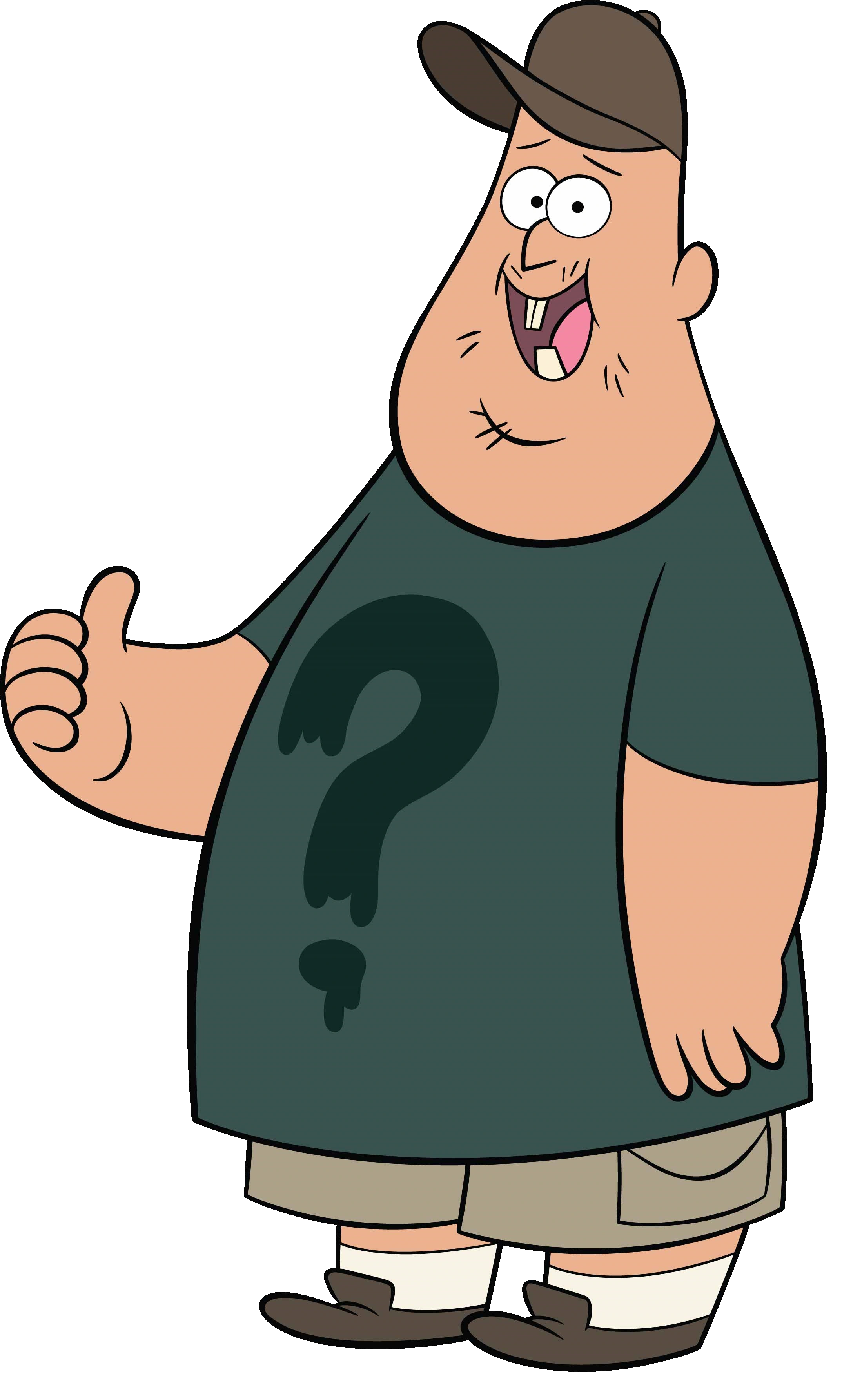
Artist Joe Quinones didn’t create the Kra-Van — that was Squirrel Girl artist Erica Henderson — but he is a solid complement for Zdarsky’s writing. Drawing Howard the Duck calls for a wide range; the book has both action and humor, and Howard himself needs a lot of subtlety of expression, which isn’t easy on a duck’s face. Quinones succeeds admirably, though. He has a tight line and he doesn’t exaggerate much, which I think is to the title’s advantage: the situations Howard gets into are absurd enough without the need for cartoon-y elements trying to ratchet up the silliness. Howard always has to be able to have a claim to keeping his dignity, and putting him in a story that turns him into a caricature robs him of that. The relatively realistic art makes Quinones sort of the book’s straight man, a role that is often underappreciated. Still, Quinones slips his own in-jokes into the story; for instance, Quinones places Soos from Gravity Falls into the book as an ignorant yokel. (Quinones changes the question mark on Soos’s shirt to an exclamation mark, but it’s definitely him.)

That being said, Duck Hunt is not all wacky adventures and jokes — and I mean that in a good way. I was genuinely moved by issue #2, drawn by guest artist Veronica Fish, which tells the life story of Linda (Howard’s female clone) and Shocket (Rocket’s female clone). It’s a tribute to Fish’s and Zdarsky’s skills that they could make me care about the distaff knockoffs of two second-tier characters within the space of a single issue, but it happens, and it doesn’t feel cheap. I never need to see the two again, but they work in this story.

As a side note, Duck Hunt does not have the three back-up Howard / Gwenpool stories that originally ran in Howard the Duck #1-3. As much as I might have appreciated the entirety of #1-3 being reprinted, I understand the space crunch the book was under: the book is seven issues long, and the Gwenpool stories would have added another issue’s worth of pages. But if they reduced the number of issues included, they would have had to remove the entire Howard / Squirrel Girl crossover. The lead Howard stories were full-length, anyway, so it’s not like readers are getting cheated.

On the other hand, cutting the book short after #5 would have left a heck of a cliffhanger … although one that wouldn’t be picked up again until the fourth story of the next trade. I suppose sometimes perfect choices are impossible.

Anyway, I wholeheartedly recommend Howard the Duck to everyone, even those who don’t like the character. This Howard, although funny, is nothing like Gerber’s acerbic takes on ‘70s culture; this book is just trying to be funny — and succeeding.

Rating: Howard the Duck symbol Howard the Duck symbol Howard the Duck symbol Howard the Duck symbol Half Howard the Duck symbol (4.5 of 5)

Labels: , , , , , , , , , , , ,

18 June 2016

Spider-Gwen, v. 1: Greater Responsibility

Collects: Spider-Gwen v. 2 #1-6 (2015-6)

Released: May 2016 (Marvel)

Format: 136 pages / color / $17.99 / ISBN: 9780785199595

What is this?: Gwen fights Lizards and learns what has happened to Peter’s Lizard serum; ol’ pal Harry Osborn returns, seeking revenge for Peter’s death.

The culprits: Writer Jason Latour and artists Robbi Rodriguez and Chris Visions


I didn’t like the first Spider-Gwen book, Spider-Gwen, v. 0: Most Wanted?, but I wanted to give the next book a chance to see if the series improved. Unfortunately, Spider-Gwen, v. 1: Greater Power isn’t an improvement.

Given how well received the series is, though, I had to figure out: what is it that made me dislike the series so much?

Spider-Gwen, v. 1: Greater Power coverThe easy answer is still the color palette. I find Spider-Gwen a series that’s physically hard to look at: the pinks, purples, and greens that dominate the book are unpleasant on the eyes. I’m not sure what colorist Rico Renzi is going for in the book. Is he using the colors usually associated with villains to show us this is a world gone wrong? Is he trying to undermine Gwen’s heroism with villain colors? Or is this a battered world, and the shades of bruised flesh are the only hues that can properly portray it?

The story itself doesn’t give an indication of which of those is correct. Instead, writer Jason Latour gives us a world and a hero who are enigmas.

And that’s my main problem. The hook for Spider-Gwen is a classic What If? hook: What if the radioactive spider had bitten Gwen Stacy instead of Peter Parker? What would be different then? Apparently, the answer is, “The world would have a Spider-Woman instead of a Spider-Man.” Not much else changes, and I understand how for some people this is enough. The reasons may vary from un-refrigerating Gwen Stacy to increasing the presence of women heroes in comics to merely wanting a beginning-of-career Spider-Man-type book or something else I haven’t thought of and could never think of, because liking is a much more complicated and yet simple (private) emotion that we generally believe.

And that’s fine. It’s more than fine, in fact. I hope Spider-Gwen lasts as long as its fans want it to. But what I’ve seen in two trade paperbacks (covering about twelve issues) is not enough to retain my interest.

Everything feels like a mere reshuffling of continuity; the elements of Spider-Man are just redealt, with Peter and Gwen switching spots. Spider-Woman is a vigilante hero whose secret identity jeopardizes her only guardian, whom she leans on for moral guidance and emotional support. She runs into the same villains Spider-Man did: the Vulture, Kingpin, and Frank Castle in the previous book, the Lizard and Green Goblin in this one. Harry Osborn’s grief leads him to become the Green Goblin. Jean DeWolff and George Stacy are still cops. (Ben Grimm is one as well, which … sure, OK, that’s a little different.) Even the trade’s title is there to remind readers of Spider-Man.

Sure, Gwen has her drumming, although she doesn’t do that in this book; that sets her apart from Peter, who was too busy for hobbies. But that raises questions about what she’s doing with her time. She’s not in school, and her job lasts a negative amount of time.

What has changed in Spider-Woman’s world? Not much. Tony Stark never gave up his warmongering, and he has a coffee franchise called Starkbucks, which is not a good name at all. (It just emphasizes the company is a rich man getting richer, whereas the coffee company was at least named for the chief mate who tried to avert the Pequod’s disastrous end in Moby Dick.) Frank Castle is a cop instead of the Punisher. Captain America is a black woman, but she still gained her powers during World War II, missed most of the intervening time, and reports to a one-eyed spymaster she served with during World War II. The Kingpin is Matt Murdock instead of Wilson Fisk, although that might be because Fisk is in prison. (In #5, Latour and artist Chris Vision even refer to the recent Mark Waid / Chris Samnee run by giving Murdock a “I’m not the Kingpin” shirt, which recalls Murdock’s “I’m not Daredevil” shirt in Waid / Samnee’s run. I’m not against references to other stories; hell, I love them, and celebrate them. But the story making the allusions has to differentiate itself from those stories somehow.)

The only new character is Bodega Bandit, a hold-up man who looks like the Hamburglar. Well, I suppose Gwen traversing universes to talk to her mentor, the main Marvel Universe’s Spider-Woman, is different as well, but I try to block out anything that refers to Spider-Verse, a crossover I hated. Also, “dimensional travel” doesn’t really fit in with the rest of Spider-Gwen, which is a book about a street-level crimefighter who plays in a band and hangs out with friends when she’s not web-slinging.

The new Captain America has the most worrying implications. I admit: a black, female Captain America is a nice twist, and it can work. But we never see the world around this character change. Would America have accepted a black, female supersoldier during World War II? I have my doubts. I also doubt an African-American woman would have been allowed to be a candidate for the role of Captain America, given that neither women nor African-Americans were allowed to serve with white men. I have even more doubts that a newsreel narrator would use the phrase “ready to fight for freedom at home, abroad” while describing her; the line is too close to the Double V campaign (“Double Victory — at Home, Abroad”) used by African-Americans during World War II. (The campaign wasn’t exactly popular among white folks, as you might imagine.) So this world must be different than ours — different, and at least in one facet, better. But we never see any evidence that it’s different in the book; most of the characters are still white. This is the same ol’ world.

The best parts of book are the mere glimpses of Gwen, Peter, and Harry before Peter dies. The dynamic is something we haven’t seen before, and Peter’s bitterness, his desire to be more than he is, is heartbreaking. Harry’s acceptance of who he is is encouraging, even if it’s undermined by his future actions. But those interactions take up less than four of the book’s 136 pages.

What is the timeline for this book, anyway? The Spider-Woman task force is geared up to search for Spider-Woman because of Peter’s death, which seems to be a recent event. But Harry Osborn, who was there the night of Peter’s death, has been gone for two years. I’m beginning to think George Stacy was replaced as head of the task force because he’s not very good at his job. And whether it’s been weeks or years, Gwen has been completely unable to protect her secret identity, which means someone should be ending up dead or arrested soon.

I haven’t talked about the plot of Greater Power, which mostly involves further use of the serum that turned Peter into the Lizard, or the art, which is by Robbi Rodriguez (#1-4 and 6) and Chris Visions (#5). I didn't like either of them, but that’s hardly the point. The point is that after two trades, it’s clear Spider-Gwen has the legs of the average What If? story: entertaining (at least for a while) if you buy into the continuity tweak, but quickly becoming dull if you don’t have an attachment to that change. Like Mutant X, for those of you who remember it, but with more coherence.

Rating: Spider-Man symbol Half Spider-Man symbol (1.5 of 5)

Labels: , , , , , , , , ,