


2009: A Musical / Dancing Review
2009 is four days gone now. Good riddance, I say. I don’t think I’ve ever been so glad to see the back of a year as I am for 2009. And I’m not sure why, exactly. Maybe it’s the long-term gloom and doom of financial crises and greed, swine flu, and terrorism. Maybe it’s because I tried to work a home-improvement project into my schedule during December as I was also preparing for Christmas and guests. Maybe I’m just bitter. Maybe it was endless crossovers and events from Marvel and DC …
Yes, that last one sounds appropriate.
But before we give 2009 a final swock to the nuggets, I decided to look through my year’s worth of reading and point out the best of my year. (Yes, I know some — many — of these didn’t come out in 2009. I don’t care. If you want timeliness, go somewhere else.) So here are the top 5s, in Marvel (which is most of what I read) and non-Marvel lists:
Marvel:
5. Guardians of the Galaxy: Legacy (4): Emerging from a crossover I didn’t care about, a bunch of characters I was only vaguely aware of were stuck in a team book that seemed to be heading for permanent crossover events. But somehow the first volume worked, and worked well.
4. Mini Marvels: Secret Invasion (4): The 2009 collection of Chris Giarrusso’s Mini Marvels wasn’t as good as the 2008 version (Rock, Paper, Scissors), but it’s still hilarious. You should all go out and buy the recently released Mini Marvels Ultimate Collection.
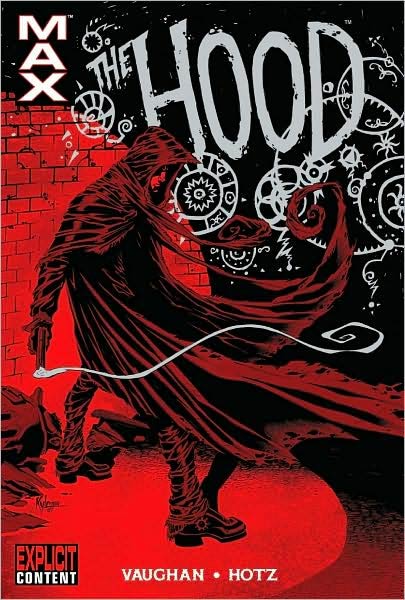
3. Hood: Blood from Stones (4): This book, which features the Hood’s origin, showed why Brian Bendis was so eager to use the petty crook turned superpowered antihero. It also showed Bendis didn’t care about what made Blood from Stones so good.
2. Incredible Hulk: Planet Hulk (4.5): A sprawling, over-the-top action movie of a comic, Planet Hulk made the Hulk interesting for the first time since Peter David left. And then Hulk was promptly handed to Jeph Loeb, who gave us Red Hulk. Way to capitalize, Marvel.
1. Age of the Sentry (4.5): Marvel’s answer to DC’s Silver Age Superman nonsense, recounted with a knowing wink and smile — but never to the detriment of the character.
Non-Marvel:
5. RASL: The Drift (4): Jeff Smith’s story about a scientist / thief who penetrates alternate realities has me eager for more. Compare this to Casanova, which also has thievery and alternate realities; Casanova threw so much high concept at the reader I was screaming for it to stop, but RASL’s slow pace has me intrigued. On the other hand, RASL’s publication schedule will mean I’ll probably remain intrigued for quite a while.
4. Promethea: Collected Edition, Book 1 (4.5): Although I wasn’t as excited by the next two volumes of Alan Moore and J.H. Williams III’s coming-of-age / metafiction comic, this one had me eager to read the rest of Sophie Bangs’s adventures.
3. Usagi Yojimbo, v. 23: Bridge of Tears (4.5): I was greatly anticipating the only new Usagi Yojimbo reprints of the year, and Stan Sakai didn’t disappoint. Of course, Sakai and Usagi never disappoint.
2. Tales Designed to Thrizzle, v. 1 (4.5): Michael Kupperman’s absurdist masterpiece nearly snuck by me, but I was glad I found it. Now I too know the majesty that is Snake ‘n’ Bacon.
1. Maus: A Survivor’s Tale: My Father Bleeds History (5): A classic for a reason — Art Spiegelman tells a story of one family’s collision with the Nazis and the Holocaust movingly, using not-so-funny funny animals, without making the protagonists perfect saints.
Honorable mention should go to The Essential Batman Encyclopedia (4.5) by Robert Greenberger as the outstanding comics reference book I read this year. Of course, I only reviewed two reference books, but that shouldn’t take away from the impressiveness of the book.
Reviews will resume on Friday. Here’s hoping 2010 will knock the sour taste 2009 left out of our mouths!
Labels: 2009 in review, Guardians of the Galaxy, Hood, Maus, Mini Marvels, not a review, Planet Hulk, Promethea, RASL, reference, Sentry, Tales Designed to Thrizzle, Usagi Yojimbo
posted by Raoul | 5:02 PM
|
0 comments

 Not that Parker is evil. He visits his mother, who has Alzheimer’s, in the nursing home, telling her stories he thinks will make her happy, and he really wants to get her into a better home. He wants to build a better life with his pregnant girlfriend, although he lies to her about how he gets his illegal money. When the use of his powers leads to the grave injury of a police officer, he’s deeply sorry; when his cousin is thrown in jail for his crimes, he works hard to get him cleared.
 But it doesn’t work out that well. The story’s relatively innocuous, running from squabbling heroes to Space Phantom to a technobabble-fuelled escape after a fight with a lesser-used Marvel cosmic power. It’s been done before, and although this is done fairly well, it’s forgettable. Also, McDuffie kills off two characters, explaining away one and assuring readers the other will return, adding to the inconsequential feel of the book. Additionally, Hank Pym seems to be acting out of character, and that’s not the same Hood that’s been showing up in Brian Bendis’s Avengers. (Then again: possible Skrull involvement. Also: definite Bendis involvement.)