


2010 in review
I had plans for a 2010 review as big as last year’s, listing my favorites (and least favorites) from among the books I reviewed this year. Unfortunately, the books I reviewed — 37 overall — tended toward the mediocre. (That’s not entirely fair; a rating of 3.5, which several books received, is above mediocre. A book that gets 3.5, in my opinion, is fun to read … but it’s not a book that inspires superlatives or a command to go out and buy the book.) So my list of books this year will be short:
- Birds of Prey, v. 5: Perfect Pitch and v. 6: Blood and Circuits: The antepenultimate and penultimate volumes of writer Gail Simone’s Birds of Prey run, these two were the apex of her work on the title. After finally shedding artist Ed Benes, Simone (coincidentally or not) was able to hone her characterization and sharpen her plots while retaining her customary witty dialogue. If forced to choose between the two, I would opt for Blood and Circuits because the developments in that book finally jolted the audience from some of its complacency about the safety of the team.
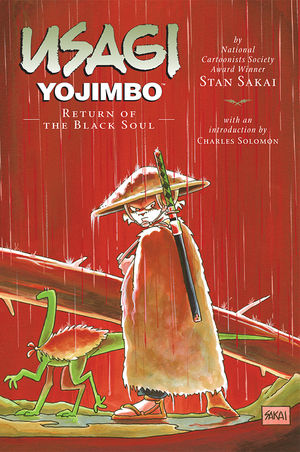
- Usagi Yojimbo, v. 24: Return of the Black Soul: Stan Sakai finally explained the origin of the demon Jei, focusing on the demon’s story for a tale that was not only frightening but surprisingly emotional. After 24 volumes of Usagi in more than 20 years, Sakai is still able to tell stories about the character and his world that are new and powerful.
- G-Man, v. 1: Learning to Fly and v. 2: Cape Crisis: I’m a big fan of Chris Giarrusso, so it’s no surprise I loved his two G-Man books. Filled with his distinctive humor — a combination of subtle sight gags, running jokes, and absurdist dialogue — G-Man still manages to have an interesting plot, and Giarrusso seems to never forget how the world seems to children.
I actually did better than I thought with the timeliness of the reviews, although given how badly I thought I did, that’s not saying much; still, nearly half the reviews were of books that came out in 2010. Fortunately, G-Man, v. 2, and Usagi Yojimbo, v. 24, were among those, so they’re my picks of 2010. Honorable mention goes to Batwoman: Elegy, the beautiful but occasionally flawed book by Greg Rucka and J.H. Williams III.
The worst books I read this year were The Pulse, v. 2: Secret War and Gigantic. Writer Brian Michael Bendis, who occasionally puts out some great stuff, also generates some of the worst, and The Pulse was about as low as this blog goes: a frequently incomprehensible decompressed mess with bad characterization, saved from a 0 rating only by art from Michael Lark and Brent Anderson. Gigantic, by writer Rick Remender and artist Dustin Nguyen, was a high-concept piece that unfortunately did not live up to the promise of the concept; the writing veered from weird to surprisingly unsurprising, and Nguyen’s scratchy art didn’t help matters either. Since Gigantic was the one that came out this year, it gets my “Worst of the Year” tag despite being better than The Pulse.
What was the best (or worst) collected edition / graphic novel you read this year?
Previous year-end wrap ups:
Labels: 2010 in review, Birds of Prey, Brian Michael Bendis, Chris Giarrusso, Dustin Nguyen, G-Man, Gail Simone, Gigantic, Pulse, Rick Remender, Stan Sakai, Usagi Yojimbo
posted by Raoul | 6:06 PM
|
2 comments

 Of course, Usagi and his friends (bounty hunters Gen and Stray Dog and the priest Sanshobo) are in just the right place to find Inazuma, as is a mysterious man named Isamu. They must compete with the bounty hunters to find Inazuma, even though they have different motivations for finding the swordswoman.
 (4.5 of 5)
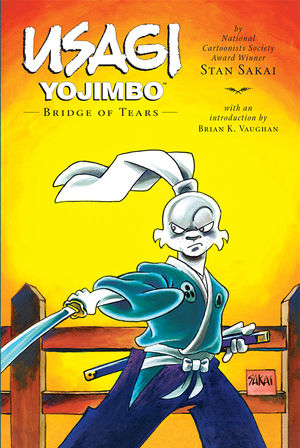 The book begins with Usagi foiling the assassination of a merchant; this is standard stuff for the rabbit ronin, who runs into trouble and people needing armed help wherever he goes. But this makes him a target for the League of Assassins. Sakai draws others into the story: the reluctant assassin Shizukiri and his prostitute lover, the waitress Mayumi who desires only to run away from her gangster-corrupted town. Sakai spends eight of the nine issues in Bridge of Tears moving them toward a climax that is far more moving than it has any right to be, given that two of the characters were created only in this volume.
Sakai also advances the subplots of other characters: Chizu, former leader of the Neko ninja on the run from her clan, and the demon Jei, being chased down by bounty hunters Ren and Stray Dog. The latter involves a dramatic battle in which it seems at any moment that Sakai might kill or maim one of his long-running characters; the former allows Sakai to give a frightening look at one way the Jei storyline might play out as well as weakening Usagi for the climax of Bridge of Tears. (Usagi is such a great swordsman even Sakai realizes it’s hard to believe Usagi will fall in a swordfight if he’s at full strength.) Though these two stories are not part of the main plot, none of the book is wasted — each story, each revelation contributes to building Bridge of Tears or in whetting the appetite for the next volume. Which I want. Now.
The only complaint I have about Bridge of Tears is that the covers are not placed before the story they illustrate, being instead grouped at the end of the volume. As good as the cover for the “Fever Dream” story — a demonically possessed Usagi in front of a long line of corpses, with the speech balloons with their last breaths filling the cover — is, it would have had an even greater impact if it had been placed with the story. Still, I suppose I should be glad they’re included.
The end of the volume is a “roast” of Stan Sakai, celebrating 100 issues of Usagi Yojimbo at Dark Horse. Although there is the occasional chuckle, it isn’t a roast, as it doesn’t make much fun of Sakai or his most famous creation, and for the most part it isn’t that funny. Sakai’s own stories in the feature and the short Sergio Aragones reminiscence of things he’s eaten with Sakai are pretty good, though.
As always, you should be reading Usagi Yojimbo. Buy this book and pre-order the next, whenever it might come out.
Rating:
The book begins with Usagi foiling the assassination of a merchant; this is standard stuff for the rabbit ronin, who runs into trouble and people needing armed help wherever he goes. But this makes him a target for the League of Assassins. Sakai draws others into the story: the reluctant assassin Shizukiri and his prostitute lover, the waitress Mayumi who desires only to run away from her gangster-corrupted town. Sakai spends eight of the nine issues in Bridge of Tears moving them toward a climax that is far more moving than it has any right to be, given that two of the characters were created only in this volume.
Sakai also advances the subplots of other characters: Chizu, former leader of the Neko ninja on the run from her clan, and the demon Jei, being chased down by bounty hunters Ren and Stray Dog. The latter involves a dramatic battle in which it seems at any moment that Sakai might kill or maim one of his long-running characters; the former allows Sakai to give a frightening look at one way the Jei storyline might play out as well as weakening Usagi for the climax of Bridge of Tears. (Usagi is such a great swordsman even Sakai realizes it’s hard to believe Usagi will fall in a swordfight if he’s at full strength.) Though these two stories are not part of the main plot, none of the book is wasted — each story, each revelation contributes to building Bridge of Tears or in whetting the appetite for the next volume. Which I want. Now.
The only complaint I have about Bridge of Tears is that the covers are not placed before the story they illustrate, being instead grouped at the end of the volume. As good as the cover for the “Fever Dream” story — a demonically possessed Usagi in front of a long line of corpses, with the speech balloons with their last breaths filling the cover — is, it would have had an even greater impact if it had been placed with the story. Still, I suppose I should be glad they’re included.
The end of the volume is a “roast” of Stan Sakai, celebrating 100 issues of Usagi Yojimbo at Dark Horse. Although there is the occasional chuckle, it isn’t a roast, as it doesn’t make much fun of Sakai or his most famous creation, and for the most part it isn’t that funny. Sakai’s own stories in the feature and the short Sergio Aragones reminiscence of things he’s eaten with Sakai are pretty good, though.
As always, you should be reading Usagi Yojimbo. Buy this book and pre-order the next, whenever it might come out.
Rating:  (4.5 of 5)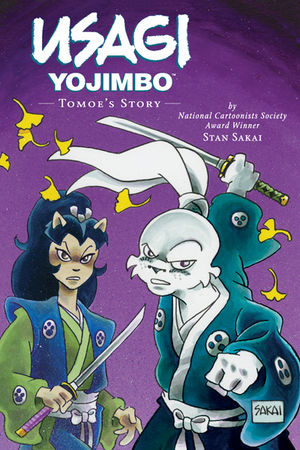
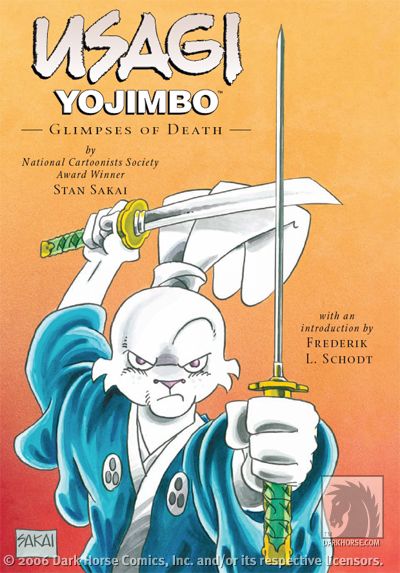 Probably no one would have thought the comic book adventures of an anthropomorphic rabbit samurai would last 20 years when Usagi Yojimbo debuted in Albedo #2 in November 1984.