


X-Factor Visionaries: Peter David, v. 1
Collects: X-Factor v. 1 #71-5 (1991-2)
Released: November 2005 (Marvel)
Format: 144 pages / color / $15.99 / ISBN: 9780785118725
What is this?: The U.S. government forms a new mutant team: X-Factor.
The culprits: Writer Peter David and artist Larry Stroman
Peter David’s run on X-Factor is much beloved, and in X-Factor Visionaries: Peter David, v. 1, Marvel’s first trade paperback reprinting David’s run, it’s easy to see why. It isn’t a masterpiece, as some would have it; however, it’s a very good example of a comedy / superheroic mashup.
Before David took over X-Factor with #70, the book had concentrated on the adventures of the original five X-Men, who had distanced themselves from the team after team founder Professor Xavier left for space and the X-Men welcomed former archvillain Magneto into their ranks. When Xavier returned, Magneto fell out of the picture, and longtime Uncanny X-Men writer Chris Claremont was ousted from the book, the line was reorganized. New Mutants had already become X-Force; the members of X-Factor returned to Uncanny X-Men, which spun off the adjectiveless X-Men title to handle all the mutants. Wolverine remained Wolverine. That left only X-Factor to be dealt with.77 To his great credit, editor Bob Harras turned the title over to David, who made it a humor title.
 Despite David’s success on Incredible Hulk, David’s direction on the higher-selling X-Factor must have felt like a terrible risk. Not only did David take the mickey out of the X-books’ traditional heavy-handed angst, he did it with a lineup of second stringers: a pair of B-list X-Men (Havok and Polaris), a former New Mutant (Wolfsbane), a B-list Avenger (Quicksilver), a guy who had been hanging around the fringes of the X-books for almost two decades (Madrox the Multiple Man), and a guy who was a bodyguard to C-lister Lila Cheney (Guido, who gets his “Strong Guy” name here). You can get less star power in a team book published by Marvel or DC, but I can’t figure out how, exactly.
But David’s humor is top notch. The breadth of David’s humor is incredible78: wordplay, throwaway references to pop culture (liaison Val Cooper mentions her FBI agent brother, Dale — Dale Cooper being the protagonist of the then-current Twin Peaks), running gags, physical humor, funny dialogue … he even uses puns in a way that won’t make you want to strangle him. Every issue is funny, and every character is funny in his or her own way.
That’s not to say there aren’t serious moments; David’s run would not have been so fondly remembered if it had only been an outlet for David’s particular brand of humor. Characters face their own traumas and hang-ups, overcome their crises. When a reporter mentions mutants keep returning from the dead, Wolfsbane retorts that her “first love” is in the grave. Over several incidents, Madrox is forced to admit the duplicates he makes of himself aren’t just cannon fodder to be discarded whenever he wants. Although it’s early days for the title, David gives warning that he is willing to put his character though the wringer and examine their heads afterwards — all while maintaining that sense of humor.
I have few quibbles about the writing. David begins the gathering of the team already in progress in #71, and I don’t think that works very well; it feels as if something’s missing or being taken for granted. Professor Xavier’s insistence that Havok take the job as X-Factor’s leader for political and public-relations reasons is laughable, given how poorly he and the X-Men have always fared on that front. (No matter what Havok does, he can’t make a shovelful of difference in the hole the X-Men have dug fur themselves.) The Nasty Boys and their political backer are extremely forgettable villains for the first arc, especially given how little X-Factor does on their government jobs in five issues.
For real objections, though, I have to turn to the art. X-Factor’s pencils are by Larry Stroman, and he’s … he’s not my favorite artist, to say the least. I had hoped Stroman’s art would grow on me like Bill Sienkiewicz’s New Mutants work did, transforming my opinion from “horrid” to “acceptable” to “fantastic.” But it was not to be: I can’t stand his exaggerated style with lumpy heads and Muppet mouths and bulbous bodies. His fight scenes — which David gives him few of, admittedly — are weak, at best. At times I find it tough to look at his pencils.
And if I have one more protest — one not related to the content — it’s the price. Sixteen dollars for 144 pages? That’s a dime a page, more than double what the original issues went for. Five issues for $16 comes out to more than $3 per issue, triple the original price, although #75 is a double issue. You can pick up used copies of Peter David, v. 1, cheaply, but still: that’s a steep asking price.
Peter David, v. 1, isn’t perfect; no book is. But despite its flaws, it should be part of every X-fan’s library.
Rating: 4.5 of 5


Labels: 2005 November, 4.5, Havok, Larry Stroman, Madrox, Marvel, Peter David, Polaris, Strong Guy, Washington DC, Wolfsbane, X-Factor
posted by Raoul | 9:30 AM
|
0 comments

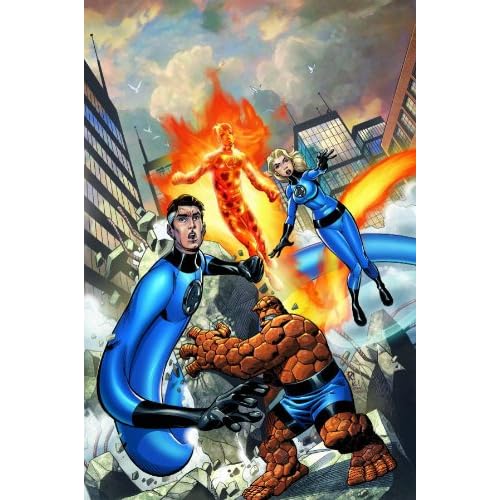 So that’s what writer Mark Waid is up against here. Poor Waid, I would think; but that’s sort of his strong point. He’s steady. Give him a superhero setup, and he’ll give you a half dozen stories on it. Sometimes they’ll be great, like his Captain America and Flash runs. He’ll rarely have a dud run. The worst that will happen is that he’ll play with the company’s toys in a largely humdrum way, then put them back where he found them. And frankly, comics will always need a lot of those guys, even though they’re not in fashion now.
