


Agents of Atlas
Collects: Agents of Atlas #1-6, Yellow Claw #1, Menace #11, Venus #1, Marvel Mystery Comics #82, Marvel Boy #1, Men’s Adventures #26, What If? (v. 1) #9 (1947, 1948, 1950, 1954, 1956, 1978, 2006)
Released: June 2007 (Marvel)
Format: 256 pages / color / $24.99 / ISBN: 9780785127123
In the previous post, I said some reviews were easy, some were hard. This is one of the hard ones.
I really wanted to like Agents of Atlas. Really, I did. I’d picked up issue #1 from a quarter bin, and I’d enjoyed it. I’d heard good things about writer Jeff Parker, mainly about his all ages work in the Marvel Adventures line and X-Men: First Class, and his Spider-Man / Wolverine story was the best part of a recent What If? TPB. I wasn’t familiar with artist Leonard Kirk, other than a somewhat forgettable Hulk story from that same What If? TPB. But the art looked excellent.
 But I’m not entirely sold on the actual product. Agents takes six rarely used, pre-Silver Age Marvel heroes (Jimmy Woo, Ken Hale the Gorilla Man, M-11 the Human Robot, Venus, Marvel Boy, and Namora) who were teamed for one issue of What If? and puts them together again. On one hand, it takes a rarely used area of the Marvel Universe — the Golden (ne Yellow) Claw and his Fu Man Chu-lite machinations — and gives them an explanation beyond mere vaulting ambition or power madness. It also takes his original adversary, FBI agent Jimmy Woo, and elevates him the job of stopping the Golden Claw.
There is an interesting and entertaining conspiracy story here, although I’m not sure about the payoff measures up to the mystery’s setup. Parker and Kirk obviously have great fun playing with these vintage, barely used toys. Ken Hale is obviously the most entertaining, getting all the good lines, and Woo, a man out of time after a death and resurrection, is compelling: he’s occasionally baffled by our bright new present, but investigating and stopping the Golden Claw is more important, keeping him from seeming like a baffled newcomer the entire book. Kirk, more than Parker, does an excellent job of making Marvel Boy, who lived for years on Uranus, look and feel alien. Kirk’s Venus is suitably beautiful, and M-11 is appropriately retro — in fact, there’s a retro vibe throughout the entire book, even in Hale’s clothing. In fact, the art is uniformly well done, with excellent storytelling and design.
But the action is sparse and the plot slow. It takes more than four issues simply to gather the team, and they had four of the six together at the beginning. This seems like wasted space, shifting time and attention away from the investigation and action. What should have been big action scenes, where the team rolls up several arms of the evil Atlas Foundation, is a disappointing montage — the most disappointing is a fight against the children from The Village of the Damned, with a page of set-up ending with the kids beating the snot out of the team, but a narration box explains Marvel Boy regained enough telepathic control to defeat them. The limited time really doesn’t allow Parker to develop the characters past their new origins, which is a shame; they’re largely unexplored, and it would be nice to get something of an arc for more than Woo and Venus.
To an extent, Parker’s story is obsessed with the past, which would be fine for an ongoing but merely complicates things in a miniseries. Namora must be resurrected. Marvel Boy’s presence must be explained, given his apparent death in a Fantastic Four #165. The contradictions in Venus’s appearances in the Marvel Universe must be explained by complicating / changing her origin. Even M-11 is altered, with the final pages of the series substantially changing his original origin story, which readers can read for themselves in the volume. The Yellow Claw sheds his horrible, racist name, which is frankly welcome. Still, that much retconning is never a good idea, and only Hale is left uncomplicated — which is perhaps why he’s the most fun part of the book.
Regardless of what Amazon says, this book is available only as one of Marvel’s Premiere hardcovers, so I put off buying it for a year, hoping there will be a paperback. (There won’t be.) There are extras in a hardcover that wouldn’t be in a paperback: reprints of the agents’ first appearances from the ‘40s and ‘50s and the team’s first appearance in What If? #9. The reprints are mainly interesting from a historical standpoint; the reasons superhero comics weren’t popular in the ‘50s go beyond cultural zeitgeist. The non-superhero comics — Menace #11, featuring the creation of the Human Robot, and Men’s Adventures #26, Gorilla Man’s first appearance — are the best, although I’m not sure they are the best of their genres for the decade. The issue of What If? is pretty good, though, with writer Don Glut having fun with a relatively inconsequential idea from Roy Thomas.
Also included in the Premiere version is a lot of promotional interviews and concept sketches detailing the creation of Agents. Sometimes this is interesting; it is always promotional material, though. A condensed version hitting the highlights would have been welcome. I’ve already bought the damn book; you don’t have to sell it to me again.
This book should be fun, given the creators’ enthusiasm and ability, but it isn’t most of the time. It’s tough to recommend this book, then; as a complete story, it falls short. The proposed ongoing series written by Parker might change that: as an opening arc, exploring these characters and moving them beyond their new status quos might be more entertaining and make this more palatable as a setup.
Rating:  (2 of 5)
Labels: 2, Agents of Atlas, Gorilla Man, Jeff Parker, Jimmy Woo, Leonard Kirk, Marvel, San Francisco, What If?
posted by Raoul | 4:38 PM
|
0 comments

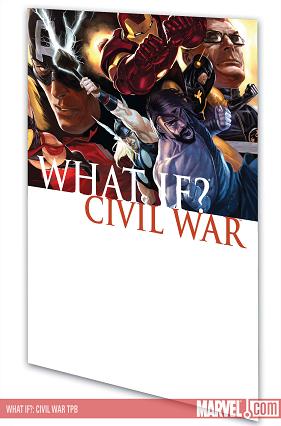 To be fair, I have not read most of the events this book uses as springboards. I didn’t care enough about Civil War, Annihilation, Planet Hulk, or (especially) The Rise and Fall of the Shi’ar Empire to read the originals, but I know enough about them that only Shi’ar Empire was slightly confusing. I have read Spider-Man vs. Wolverine, but that was from the mid ‘80s.