


Jack Kirby and creator credit
Last fall, the heirs of Jack Kirby reached a settlement with Marvel Comics. The terms of the settlement haven’t been announced, at least not that I have seen; it’s probable the settlement included cash for the family and increased recognition for Kirby in the comics and other media in which his co-creations are used.
The recognition is welcome news; the threat of legal action might have been part of the reason Marvel did not include Kirby’s name in many places it should have before. (Another part of the reason — and you can decide what proportion this makes up — is Marvel being stubborn and / or stupid.) The money is also good news for Kirby’s family; Jack Kirby is no longer around to be rewarded, but his family would have benefited if he had received in life the kind of monetary recompense his reputation suggests he deserves, so it makes sense they should receive some reward now.
I have been thinking about my feelings about the case for some time now — probably too long, as the case is passing below the public’s horizon. I admit I was somewhat ambivalent to the Kirby case. I have no idea what his heirs were legally entitled to, and in truth, it seems no one else does either. Decades of copyright decisions suggest the Kirby family would have lost, but given the Supreme Court’s interest, the outcome might — might — have been different this time. I often wondered why I followed the case at all; I have no affection for Kirby’s art, and none of the heirs created anything, making the legal battle one between a corporation fighting for profits vs. a family fighting for a ghost — an imaginary person fighting for money vs. real people fighting for a former person. Neither side appealed to my emotions.
(As an aside: While I don’t care for Kirby’s art, I do respect his place in comic history, and he remains one of the premier — perhaps the premier — imaginations to have ever worked in the comics industry.)
I should be sympathetic to the creative side of any argument, but the heirs’ contention that Kirby co-created Spider-Man, even though the evidence of this is thin at best and evanescent at worst, distressed me. Building the case for Kirby’s greatness shouldn’t mean diluting the credit given to others. Worse, it was Steve Ditko’s creation they tried to horn in on, and Ditko’s legacy is already dimmed by the shadow Kirby cast on Marvel’s Silver Age. I understand this contention was a bargaining chip; when you set out your demands, you always stake out ground as far forward as you can so you can give up some ground and still get what you want. Still, it rankled.
But this did make me wonder if too much stock is placed in the original creators and too little in subsequent creators. We moan and complain when Kirby isn’t acknowledged as a co-creator of certain characters, but when X-Men 2 broadly (but recognizably) adapted parts of Chris Claremont and Brent Anderson’s God Loves, Man Kills and Barry Windsor-Smith’s Weapon X stories, we let that go by. It is enough if Kirby and Stan Lee are recognized as creators of the X-Men. But which comic creators had a greater effect on that movie? I would argue the Claremont, Anderson, and Windsor-Smith did far more to make X-Men 2 the outstanding movie it was than the men who created the X-Men and wrote the title for about two years.
Or to take an example entirely within the realms of comics, we can look at Iron Man. Iron Man was officially created by Kirby, Lee, Larry Lieber (who wrote Iron Man’s first appearance, Tales of Suspense #39), and Don Heck (who drew ToS #39). Lee claimed to have come up with the idea — he always claimed that, even when it might not be true — and according to Heck, Kirby designed the Iron Man armor, while Heck created the look of the other characters, including Tony Stark and Pepper Potts. But the original bulbous Iron Man armor was quickly done away with, and the more streamlined red-and-yellow armor we associate with Iron Man was designed by Ditko in ToS #48. So what did Kirby contribute that made a meaningful impact on the character? Little to none in the art department, it appears, but Ditko’s iconic design doesn’t get any consistent acknowledgement.
Of course, it’s possible Kirby contributed to the idea of Iron Man in the early stages; Kirby’s supporters often point out Lee’s bolts of inspiration were rarely as purely Lee’s as Lee claimed. Also, Kirby isn’t around to say what he did or didn’t do. Given that Kirby was a great idea man, I wouldn’t be surprised if some of his thoughts were incorporated into Iron Man’s origin.
But that brings me back to what I was wondering before. We remember his long run on Fantastic Four (more than 100 issues) and, but Kirby didn’t stick around some of the Silver Age titles he created for very long: only six issues on Hulk, three of the first five issues on Iron Man, seventeen issues on X-Men. Seventeen issues isn’t nothing, but it’s important to note that X-Men was, until the late ‘70s, the biggest failure of Marvel’s Silver Age explosion. The title was cancelled in 1970 and turned into a bi-monthly reprint title until 1975, when Chris Claremont and a long string of talented artists made it into Marvel’s #1 title. How much credit — not in the sense of “created by” but in the sense of making something a success — do Lee and Kirby deserve for pursuing an idea for seventeen issues (21 for Lee) that the market essentially rejected?
Lee and Kirby deserve some credit, yes. But the person who should get the largest thank you at the end of an X-Men movie is Chris Claremont. Even if he didn’t create most of the characters, he’s the person who made many of them — Wolverine, Magneto, Storm — interesting. Without him and his co-creators, no one would want to watch an X-Men movie, let alone five of them.
This brings me to an idea I considered for some time. Since the versions of these characters that are best known are the movie versions, I thought about looking at who created what in the movies. At one point, I thought about trying to find the creator who was most valuable in the sense of box office receipts, but that would involve some arcane breakdowns of credit — what percentage of credit should be given to Wolverine for the X-Men movies’ success vs. Mystique or Magneto? — that was unprofitable.
(Besides, the answer for the entire Marvel Cinematic Universe would almost certainly be Stan Lee.)
Without Jack Kirby, it is somewhere between possible and likely that Marvel wouldn’t have survived the early ‘60s. The characters we know would be greatly different or wouldn’t exist at all. But it’s been 45 years since Kirby left Marvel the first time, which means dozens of other creators have altered, edited, and recreated what the characters and concepts he created. His influence can still be seen in Marvel’s output, both on page and screen, and some of what they publish hasn’t changed much since Kirby put aside his pens.
One of the greatest literary talents of the early 20th century was Thomas Wolfe, who wrote sprawling novels with beautiful prose. I mean really sprawling — the original manuscript of his first novel was more than 1,100. His editor, Maxwell Perkins, cut Look Homeward, Angel considerably and helped make it a success. Does it harm Wolfe’s literary reputation to acknowledge that Perkins’s considerable work made Wolfe’s better? And if acknowledging that sort of collaboration improved a novel, supposedly a solitary effort, how does acknowledging the contributions of others harm the original creators in comics, which often relies on collaboration?
The recognition is welcome news; the threat of legal action might have been part of the reason Marvel did not include Kirby’s name in many places it should have before. (Another part of the reason — and you can decide what proportion this makes up — is Marvel being stubborn and / or stupid.) The money is also good news for Kirby’s family; Jack Kirby is no longer around to be rewarded, but his family would have benefited if he had received in life the kind of monetary recompense his reputation suggests he deserves, so it makes sense they should receive some reward now.
I have been thinking about my feelings about the case for some time now — probably too long, as the case is passing below the public’s horizon. I admit I was somewhat ambivalent to the Kirby case. I have no idea what his heirs were legally entitled to, and in truth, it seems no one else does either. Decades of copyright decisions suggest the Kirby family would have lost, but given the Supreme Court’s interest, the outcome might — might — have been different this time. I often wondered why I followed the case at all; I have no affection for Kirby’s art, and none of the heirs created anything, making the legal battle one between a corporation fighting for profits vs. a family fighting for a ghost — an imaginary person fighting for money vs. real people fighting for a former person. Neither side appealed to my emotions.
(As an aside: While I don’t care for Kirby’s art, I do respect his place in comic history, and he remains one of the premier — perhaps the premier — imaginations to have ever worked in the comics industry.)
I should be sympathetic to the creative side of any argument, but the heirs’ contention that Kirby co-created Spider-Man, even though the evidence of this is thin at best and evanescent at worst, distressed me. Building the case for Kirby’s greatness shouldn’t mean diluting the credit given to others. Worse, it was Steve Ditko’s creation they tried to horn in on, and Ditko’s legacy is already dimmed by the shadow Kirby cast on Marvel’s Silver Age. I understand this contention was a bargaining chip; when you set out your demands, you always stake out ground as far forward as you can so you can give up some ground and still get what you want. Still, it rankled.
But this did make me wonder if too much stock is placed in the original creators and too little in subsequent creators. We moan and complain when Kirby isn’t acknowledged as a co-creator of certain characters, but when X-Men 2 broadly (but recognizably) adapted parts of Chris Claremont and Brent Anderson’s God Loves, Man Kills and Barry Windsor-Smith’s Weapon X stories, we let that go by. It is enough if Kirby and Stan Lee are recognized as creators of the X-Men. But which comic creators had a greater effect on that movie? I would argue the Claremont, Anderson, and Windsor-Smith did far more to make X-Men 2 the outstanding movie it was than the men who created the X-Men and wrote the title for about two years.
Or to take an example entirely within the realms of comics, we can look at Iron Man. Iron Man was officially created by Kirby, Lee, Larry Lieber (who wrote Iron Man’s first appearance, Tales of Suspense #39), and Don Heck (who drew ToS #39). Lee claimed to have come up with the idea — he always claimed that, even when it might not be true — and according to Heck, Kirby designed the Iron Man armor, while Heck created the look of the other characters, including Tony Stark and Pepper Potts. But the original bulbous Iron Man armor was quickly done away with, and the more streamlined red-and-yellow armor we associate with Iron Man was designed by Ditko in ToS #48. So what did Kirby contribute that made a meaningful impact on the character? Little to none in the art department, it appears, but Ditko’s iconic design doesn’t get any consistent acknowledgement.
Of course, it’s possible Kirby contributed to the idea of Iron Man in the early stages; Kirby’s supporters often point out Lee’s bolts of inspiration were rarely as purely Lee’s as Lee claimed. Also, Kirby isn’t around to say what he did or didn’t do. Given that Kirby was a great idea man, I wouldn’t be surprised if some of his thoughts were incorporated into Iron Man’s origin.
But that brings me back to what I was wondering before. We remember his long run on Fantastic Four (more than 100 issues) and, but Kirby didn’t stick around some of the Silver Age titles he created for very long: only six issues on Hulk, three of the first five issues on Iron Man, seventeen issues on X-Men. Seventeen issues isn’t nothing, but it’s important to note that X-Men was, until the late ‘70s, the biggest failure of Marvel’s Silver Age explosion. The title was cancelled in 1970 and turned into a bi-monthly reprint title until 1975, when Chris Claremont and a long string of talented artists made it into Marvel’s #1 title. How much credit — not in the sense of “created by” but in the sense of making something a success — do Lee and Kirby deserve for pursuing an idea for seventeen issues (21 for Lee) that the market essentially rejected?
Lee and Kirby deserve some credit, yes. But the person who should get the largest thank you at the end of an X-Men movie is Chris Claremont. Even if he didn’t create most of the characters, he’s the person who made many of them — Wolverine, Magneto, Storm — interesting. Without him and his co-creators, no one would want to watch an X-Men movie, let alone five of them.
This brings me to an idea I considered for some time. Since the versions of these characters that are best known are the movie versions, I thought about looking at who created what in the movies. At one point, I thought about trying to find the creator who was most valuable in the sense of box office receipts, but that would involve some arcane breakdowns of credit — what percentage of credit should be given to Wolverine for the X-Men movies’ success vs. Mystique or Magneto? — that was unprofitable.
(Besides, the answer for the entire Marvel Cinematic Universe would almost certainly be Stan Lee.)
Without Jack Kirby, it is somewhere between possible and likely that Marvel wouldn’t have survived the early ‘60s. The characters we know would be greatly different or wouldn’t exist at all. But it’s been 45 years since Kirby left Marvel the first time, which means dozens of other creators have altered, edited, and recreated what the characters and concepts he created. His influence can still be seen in Marvel’s output, both on page and screen, and some of what they publish hasn’t changed much since Kirby put aside his pens.
One of the greatest literary talents of the early 20th century was Thomas Wolfe, who wrote sprawling novels with beautiful prose. I mean really sprawling — the original manuscript of his first novel was more than 1,100. His editor, Maxwell Perkins, cut Look Homeward, Angel considerably and helped make it a success. Does it harm Wolfe’s literary reputation to acknowledge that Perkins’s considerable work made Wolfe’s better? And if acknowledging that sort of collaboration improved a novel, supposedly a solitary effort, how does acknowledging the contributions of others harm the original creators in comics, which often relies on collaboration?
Labels: Barry Windsor-Smith, Brett Anderson, Chris Claremont, Don Heck, Iron Man, Jack Kirby, Larry Lieber, Maxwell Perkins, not a review, Stan Lee, Steve Ditko, Thomas Wolfe, X-Men
posted by Raoul | 12:03 AM
|
0 comments

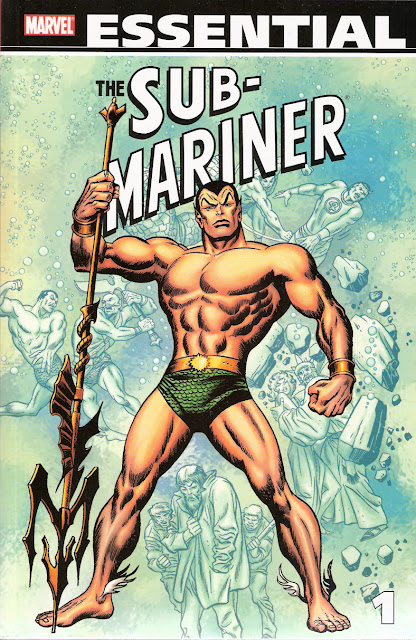 What Essential Sub-Mariner collects is the Namor stories from Tales to Astonish; the title had formerly been an anthology series and had been converted, like Strange Tales and Tales of Suspense, into superhero comics featuring two different heroes in their own tales. Namor shared Astonish with another headstrong brute, the Hulk, but the two never met in the title they cohabited. If they had, they would have made Tales to Astonish the most redundant title of redundancy.
 (1.5 of 5)
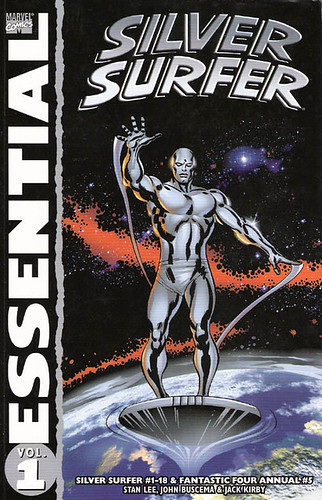 The Surfer was a personal favorite of co-creators Stan Lee and Jack Kirby, with
 (1 of 5)

 (3.5 of 5)
  There’s a lot of action here, with Captain America plowing through dozens of peons per page. But when it comes down to it, he always ends up defeating a Nazi with his mind rather than brawn; the Nazi, usually the Red Skull, always seems to die. Strangely, the Skull is awfully honorable for a genocidal maniac, and he doesn’t realize a bullet to Cap’s skull would solve all his problems. That would end the stories of course, and writer / editor / delegator Stan Lee knows how to keep things going, even if he can’t always get them to make sense.
 In the annals of Marvel, She-Hulk seems underappreciated. For a character who has been both an Avenger and a member of the Fantastic Four as well as having four solo series, rarely does anyone talk about the character. Sure, the second series, by John Byrne, is remember for being a humor series that broth the fourth wall and not much else, despite running X issues. The third and fourth series, written by Dan Slott are critically acclaimed but low sellers. And I don’t think I’ve ever heard anyone talk about the first series, Savage She-Hulk.
 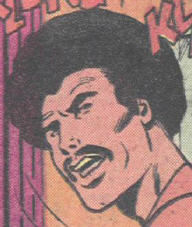 The supporting cast is dull, dreadfully dull. Jen engages in the most tepid love triangle in Marvel’s history, with Jen between a Man-Thing castoff (loser Richard Rory) and the med student next door (“Zapper” Ridge). Neither has much of a personality. For some reason, Jen prefers Rory, while She-Hulk’s likes to jump Zapper’s bones. But Zapper has a Magnum moustache and an impressive ‘fro, so he gets the girl in the end.